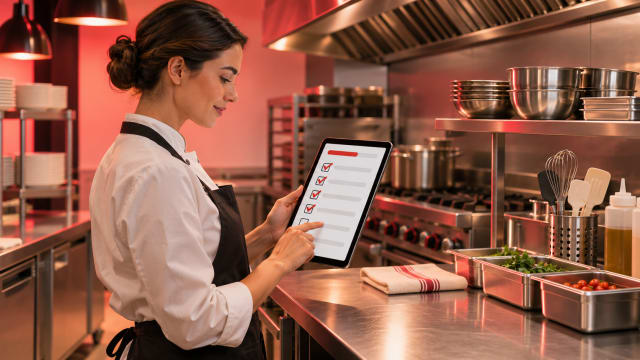
Temperature monitoring can mean two different things: continuous sensors that watch equipment, or guided checks completed by staff with a probe. Many restaurants need both. Sensors can alert a manager when a cooler drifts out of range; manual checks still confirm food and process temperatures that fixed equipment cannot see.
Compare the complete deployment: gateways, probes, calibration, connectivity, alert escalation, battery replacement and data retention. A low software fee does not automatically mean a low installed cost.
Editorial disclosure: ChefPin selected these products using public product information, restaurant relevance, workflow coverage and buying clarity. No vendor paid for inclusion or position, and there are no affiliate links in this guide. Pricing was checked on November 17, 2026; promotions, add-ons, hardware, implementation and payment-processing charges can change.
Quick comparison
| Rank | Platform | Best fit | Published pricing approach |
|---|---|---|---|
| 1 | ComplianceMate | Foodservice operators wanting sensors plus digital food-safety workflows | Custom quote |
| 2 | SmartSense by Digi | Multi-site foodservice organizations needing enterprise monitoring | Custom quote |
| 3 | Monnit | Operators building configurable wireless sensor deployments | Hardware and service pricing varies |
| 4 | ThermoWorks | Restaurants wanting professional probes and connected logging | Published hardware; cloud plan varies by deployment |
| 5 | Testo | Foodservice teams combining instruments and monitoring | Hardware and service pricing varies |
| 6 | SafetyCulture Sensors | Teams already using SafetyCulture inspections and actions | Custom hardware and plan quote |
| 7 | Jolt | Restaurants combining logs, tasks, labels and sensors | Custom quote |
| 8 | Sensaphone | Operators needing environmental alarms and remote monitoring | Published hardware varies; monitoring options vary |
| 9 | Dickson | Organizations needing calibrated environmental monitoring | Custom and published hardware options |
| 10 | Swift Sensors | Multi-location operators wanting wireless sensor analytics | Custom quote |
The table is a shortlist, not a universal ranking. Request a written quote using your employee count, locations, modules, hardware and implementation needs.
1. ComplianceMate
Best for: Foodservice operators wanting sensors plus digital food-safety workflows
Pricing: Custom quote. See the official ComplianceMate page for current terms.
Key features to evaluate:
- wireless monitoring
- digital checklists
- alerts and reporting
What to check before buying: Request hardware, installation, support and subscription costs separately.
2. SmartSense by Digi
Best for: Multi-site foodservice organizations needing enterprise monitoring
Pricing: Custom quote. See the official SmartSense by Digi page for current terms.
Key features to evaluate:
- connected sensors
- alert escalation
- compliance analytics
What to check before buying: Ask about connectivity, calibration and device replacement terms.
3. Monnit
Best for: Operators building configurable wireless sensor deployments
Pricing: Hardware and service pricing varies. See the official Monnit page for current terms.
Key features to evaluate:
- wireless temperature sensors
- gateways and cloud monitoring
- alerts and data logs
What to check before buying: Confirm foodservice suitability, calibration options and required gateway coverage.
4. ThermoWorks
Best for: Restaurants wanting professional probes and connected logging
Pricing: Published hardware; cloud plan varies by deployment. See the official ThermoWorks page for current terms.
Key features to evaluate:
- connected probes and sensors
- cloud monitoring
- alerts and reporting
What to check before buying: Price each device, gateway and subscription for the actual layout.
5. Testo
Best for: Foodservice teams combining instruments and monitoring
Pricing: Hardware and service pricing varies. See the official Testo page for current terms.
Key features to evaluate:
- food temperature instruments
- data logging and monitoring
- food-safety workflows
What to check before buying: Confirm calibration services and software licensing.
6. SafetyCulture Sensors
Best for: Teams already using SafetyCulture inspections and actions
Pricing: Custom hardware and plan quote. See the official SafetyCulture Sensors page for current terms.
Key features to evaluate:
- temperature sensors
- alerts and issue actions
- inspection integration
What to check before buying: Ask which subscription and connectivity costs apply in addition to hardware.
7. Jolt
Best for: Restaurants combining logs, tasks, labels and sensors
Pricing: Custom quote. See the official Jolt page for current terms.
Key features to evaluate:
- temperature sensors
- food-safety logs
- manager alerts
What to check before buying: Request full hardware, printer and software pricing.
8. Sensaphone
Best for: Operators needing environmental alarms and remote monitoring
Pricing: Published hardware varies; monitoring options vary. See the official Sensaphone page for current terms.
Key features to evaluate:
- temperature and environmental sensors
- phone, text or email alerts
- data logging
What to check before buying: Verify cloud fees, cellular service and installation responsibilities.
9. Dickson
Best for: Organizations needing calibrated environmental monitoring
Pricing: Custom and published hardware options. See the official Dickson page for current terms.
Key features to evaluate:
- data loggers and sensors
- calibration services
- cloud reporting
What to check before buying: Confirm whether the selected device and calibration meet the restaurant’s operating requirements.
10. Swift Sensors
Best for: Multi-location operators wanting wireless sensor analytics
Pricing: Custom quote. See the official Swift Sensors page for current terms.
Key features to evaluate:
- wireless sensors
- cloud alerts
- multi-site dashboards
What to check before buying: Ask about gateway density, battery life and ongoing support.
Capabilities to evaluate
- Continuous equipment sensing
- Probe-based food checks
- Configurable thresholds and escalation
- Calibration and device-health records
- Offline or cellular fallback
- Audit-ready logs and corrective actions
A practical demo checklist
- Simulate a high-temperature alert and missed acknowledgement.
- Disconnect a gateway and show how the system reports the outage.
- Record probe calibration and a corrective action.
- Assign alerts by location, time and manager role.
- Export one month of readings and event history.
- Calculate hardware, installation, connectivity and subscription cost for five units.
Calculate the real first-year cost
Compare subscription fees with implementation, data migration, hardware, integrations, messaging or payment usage, training, support and internal administration time. Use the same employee and location assumptions for every quote. Promotions should be shown separately from the normal recurring price.
Before signing, ask the vendor to identify the system of record, data-export method, cancellation terms and costs that are not included in the proposal. A restaurant should be able to leave with its operational records in a usable format.
Connect the software decision to hiring
Software can organize work, but restaurants still need clear roles and suitable people. Employers can find chefs in the United States, and candidates can browse chef jobs in the United States. For a related comparison, read our restaurant employee training software.
Frequently asked questions
Do wireless sensors replace manual food checks?
No. They can continuously monitor equipment or environments, while staff still need appropriate checks for receiving, cooking, cooling, holding and other processes.
What happens if the internet fails?
The answer depends on the device. Ask whether readings are stored locally, whether cellular backup exists and how missed data is shown after reconnection.
How should alert thresholds be configured?
Use the restaurant’s approved food-safety plan and equipment requirements. Avoid copying generic defaults without review by a qualified operator.
Final recommendation
Shortlist two or three products that match the restaurant’s size and primary workflow. Run the same realistic demo in each, include an hourly employee and a location manager, and score usability, reporting, integration, support and total first-year cost. Choose the product the team can operate consistently—not the one with the longest feature list.
Pricing and product information checked November 17, 2026. Vendors may change plans, features and availability. ChefPin did not accept payment for inclusion or ranking.