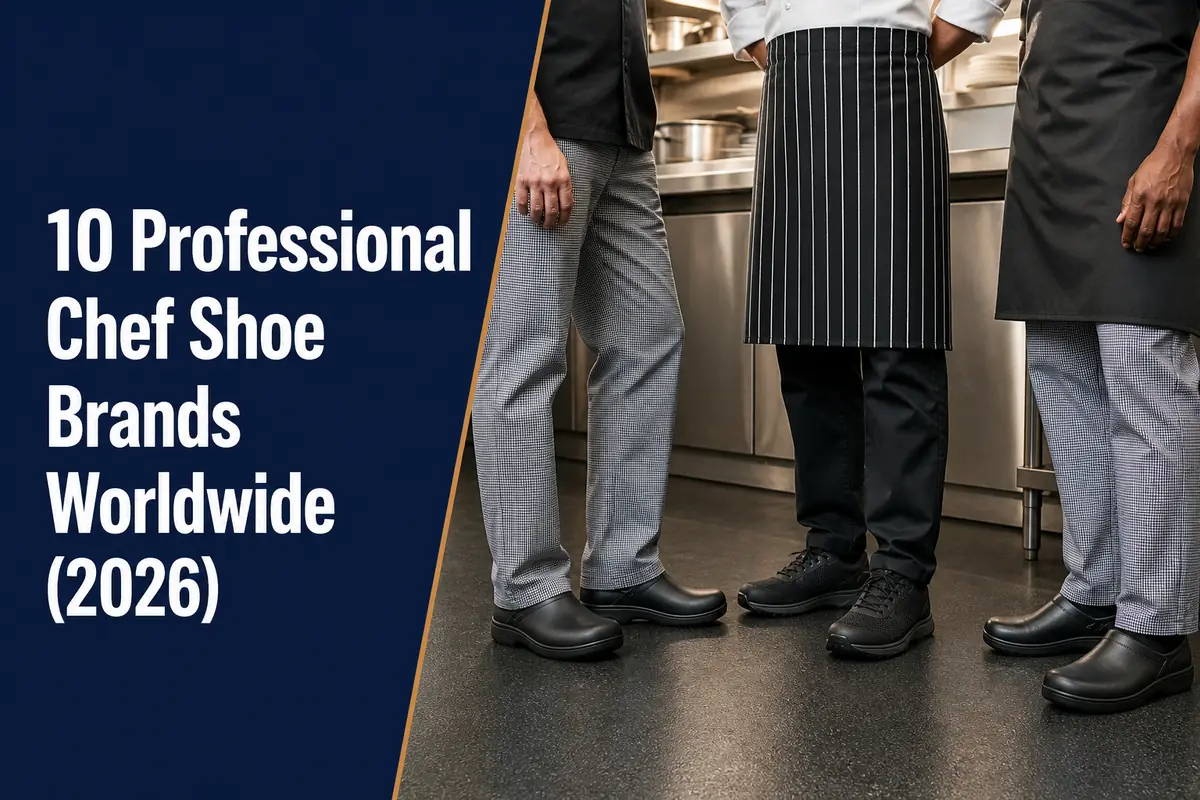
# 10 Professional Chef Shoe Brands Worldwide (2026): Kitchen Footwear Buyer Guide
Kitchen footwear is safety equipment you wear for an entire shift. It must provide reliable traction on the floors and contaminants found in your workplace, fit the wearer correctly, tolerate repeated cleaning and remain stable while a chef turns, carries and stands for hours.
This guide compares 10 established brands with occupational footwear relevant to chefs, cooks, bakers and restaurant teams. Brands are listed alphabetically, not ranked. ChefPin accepted no payment for inclusion or position. Product availability, test standards and specifications vary by model and country, so approve the exact style—not only the logo.
For a coordinated kitchen program, use this guide with ChefPin's comparison of professional chef uniform and apron brands.
Quick comparison of 10 professional kitchen footwear brands
| Brand | Product emphasis | Practical fit | Verify before buying |
|---|---|---|---|
| Birkenstock Professional | Washable clogs and occupational shoes | Kitchens wanting easy-clean molded footwear | Exact certification, heel design and wash limits |
| Crocs at Work | Molded work clogs and work sneakers | Value-conscious food-service teams | Choose a Work model; ordinary Crocs are not equivalent |
| Dansko | Occupational clogs and work shoes | Wearers who prefer structured clog support | Model-specific slip resistance, fit and heel movement |
| KEEN Utility | Leather service shoes and slip-on work footwear | Teams wanting a shoe-like fit and wipe-clean upper | Local model availability, width and safety specification |
| Shoes For Crews | Large food-service range and company programs | Multi-role or multi-location restaurant groups | Regional assortment, employee allowance and replacement terms |
| Skechers Work | Athletic-style slip-resistant work shoes | Teams preferring sneaker construction | Upper cleanability and the exact outsole/test rating |
| Snibbs | Chef-developed work sneakers and slip-ons | Modern independent restaurants and long active shifts | Fit, water-resistance level and local returns |
| Toffeln | Occupational clogs and work footwear | Buyers seeking documented work-shoe features | Kitchen suitability, standard, distributor and size range |
| WearerTech | Chef-focused occupational footwear | UK and selected international hospitality teams | Export availability, trial policy and exact certification |
| WOCK | Washable clogs and occupational safety shoes | Kitchens prioritizing hygiene and molded footwear | Heel retention, toe protection and regional conformity documents |
No table can tell you which shoe fits an employee. Use it to build a shortlist, then conduct a documented workplace trial with the exact floor, cleaning chemicals and normal shift tasks.
1. Birkenstock Professional
Birkenstock Professional offers kitchen and food-industry footwear including molded clogs and occupational shoes. Depending on the model, features may include washable polyurethane construction, removable footbeds, oil- or grease-resistant materials, closed heel sections and certified occupational specifications.
Why shortlist it: Molded styles such as the Profi Birki and Super Birki families can appeal to kitchens that prioritize wipe-down or washable uppers and replaceable footbeds.
What to verify: Similar-looking models do not necessarily share the same heel form, footbed, wash temperature or certification. Confirm the exact article number and current declaration for your market. Test whether the heel and instep remain secure during fast changes of direction.
2. Crocs at Work
Crocs at Work includes footwear designed for food service and hospitality. The Bistro Work Clog, for example, has an enclosed toe, a thicker metatarsal area, a molded easy-clean construction and a slip-resistant work outsole.
Why shortlist it: The work range is recognizable, relatively simple to clean and available in multiple countries, making it a practical trial option for high-turnover teams or individual employees.
What to verify: A Classic lifestyle clog is not automatically a restaurant work shoe. Buy only the approved model with the required work outsole and coverage. Confirm whether ventilation holes, heel straps or decorations are permitted by your employer and local hygiene rules.
3. Dansko
Dansko sells professional clogs and occupational footwear, including styles with slip-resistant outsoles tested for dry, wet and oily/wet conditions. Its XP 2.0 range combines a clog profile with a removable footbed and occupational outsole.
Why shortlist it: Dansko is relevant for chefs who prefer a structured clog, defined arch support and a roomier toe area rather than a flexible athletic shoe.
What to verify: The iconic Professional and the slip-resistant XP lines are not interchangeable specifications. Confirm the precise model and outsole. Clog movement feels different from a lace-up shoe, so trial stairs, ramps, turning and carrying before approving it for a role.
4. KEEN Utility
KEEN Utility offers PTC service footwear with oil- and slip-resistant outsoles, water-resistant leather and wipe-clean designs. Options include Oxford and slip-on constructions in men's and women's sizing, with some styles offering width choices.
Why shortlist it: It can suit employees who want conventional shoe coverage, lacing or a secure slip-on fit while retaining work-focused outsole and upper features.
What to verify: Soft toe does not mean safety toe. Match any impact or crush-protection requirement to the exact certification and workplace risk assessment. Check whether water resistance is enough for the employee's exposure; it is not necessarily waterproofing.
5. Shoes For Crews
Shoes For Crews maintains a large food-service catalog spanning athletic, casual, clog, dress and work-boot styles. It also supports company footwear programs, which may simplify ordering for restaurant groups with kitchen and front-of-house roles.
Why shortlist it: A wide range of sizes, widths and silhouettes can help one program serve different jobs and wearer preferences while maintaining an approved outsole policy.
What to verify: The online assortment and partner brands differ by country. Define which exact models employees may select, how much the employer pays and how replacements work. A large catalog needs governance or teams may order footwear that does not match the role.
6. Skechers Work
Skechers Work includes slip-resistant occupational shoes with athletic or casual styling. The Cessnock range, for example, combines a roomy fit, cushioned insole and an outsole rated for wet, dry, oily and greasy surfaces.
Why shortlist it: Restaurant workers who dislike clogs may find a familiar sneaker profile easier to accept, and broad retail distribution can make fitting more convenient in many markets.
What to verify: Mesh or knit uppers can behave differently from molded or leather footwear around splashes and cleaning. Review the precise upper, electrical or other ratings, cleanability and drying time. Do not assume every Skechers shoe is a Skechers Work slip-resistant model.
7. Snibbs
Chef-founded Snibbs focuses on slip-resistant work footwear for chefs, servers, healthcare and other standing professions. Its collection includes water-resistant work sneakers, lightweight knit options and slip-on designs, with model-specific testing and care instructions.
Why shortlist it: Contemporary styling and hospitality-led product development may appeal to independent restaurants, open kitchens and employees seeking an athletic feel.
What to verify: Water-resistant models provide different coverage from lighter breathable designs. Match the upper to the station, and read whether a style should be wiped or machine washed. For international orders, calculate duty and confirm worn-shoe return eligibility before a team trial.
8. Toffeln
Toffeln develops occupational footwear including clogs with documented slip-resistant and antistatic features. The company is strongly associated with healthcare, but selected work-footwear characteristics may also be relevant to food-service buyers where the model is approved for the intended environment.
Why shortlist it: Procurement teams seeking molded occupational footwear, replaceable components or formal technical information may find suitable models through Toffeln and its distributors.
What to verify: Do not treat healthcare suitability as automatic kitchen suitability. Ask the supplier to identify models intended for food preparation and provide the current conformity documents, chemical resistance, cleanability and sole test relevant to your jurisdiction.
9. WearerTech
WearerTech markets non-slip work footwear specifically for chefs and kitchen workers, with an emphasis on comfort during long periods of standing.
Why shortlist it: A kitchen-specific range can simplify initial product selection for UK hospitality businesses and buyers served by the brand's distribution network.
What to verify: Request the current model-specific test report, size chart and care procedure. Establish export cost, delivery times and returns before ordering outside the home market. Comfort claims still require individual fit testing across real shifts.
10. WOCK
WOCK offers molded clogs and occupational footwear for kitchens and food-industry settings. Its range includes washable designs, multiple heel configurations and models with safety or conformity documentation.
Why shortlist it: The breadth of molded footwear, colors and occupational specifications can suit food production, catering and restaurant teams that prioritize cleaning and standardization.
What to verify: Choose the heel enclosure, upper coverage and toe protection required by the task. Confirm the declaration of conformity for the exact model, the cleaning temperature and whether replacement insoles can be sourced locally.
What makes a good professional chef shoe?
Model-specific slip resistance
“Non-slip” is an absolute-sounding phrase, but no shoe prevents every slip. Look for a named occupational standard or documented test on the exact model, and check that it covers relevant contaminants and surfaces. Standards differ between markets and change over time; a result under one method should not be casually compared with a claim under another.
Footwear is only one control. Prompt spill cleanup, suitable flooring, maintained drainage, good housekeeping and correct degreasing remain essential.
Secure fit and heel retention
The shoe should remain stable while the wearer turns, climbs, crouches and carries. A clog may allow some heel movement by design, while a lace-up, elastic slip-on or heel strap can feel more secure. The correct choice depends on fit, task and workplace policy.
Upper coverage and cleanability
Smooth molded or leather-like uppers are usually easier to wipe than open mesh. Breathable uppers may feel cooler but can allow liquid through more readily. Confirm whether the shoe is washable, wipe-clean, water resistant or waterproof—these terms are not synonyms.
Cushioning without instability
Soft cushioning can feel impressive during a fitting, but a chef also needs lateral stability and predictable footing late in the shift. Evaluate the entire shoe: midsole, footbed, heel counter, shank, toe room and outsole. A removable insole may help some wearers use an approved orthotic, but only if fit and heel security remain correct.
Appropriate protection
A closed toe can help with minor splashes but is not the same as a certified safety toe. Hot liquids, dropped loads, knives, chemicals and electrical hazards require a workplace assessment. Buy protective footwear that meets the applicable local standard where those hazards cannot be controlled another way.
Clog, slip-on or lace-up: which format fits the job?
| Format | Potential advantages | Trade-offs to test |
|---|---|---|
| Molded clog | Easy to wipe or wash; simple on and off | Heel retention, heat, stair use and fit variation |
| Occupational leather clog | Structured support and durable upper | Weight, break-in, heel movement and cleaning |
| Elastic slip-on | Secure shoe profile without loose laces | Instep pressure, entry stretch and liquid protection |
| Lace-up work sneaker | Adjustable fit and familiar athletic feel | Laces, mesh cleanability, drying time and spill resistance |
| Safety shoe or boot | Added certified protection where required | Weight, heat, flexibility and whether protection is actually necessary |
Avoid open-toe sandals in food-production areas unless a competent local risk assessment and workplace policy explicitly allow them. Fashion footwear, running shoes and casual clogs should not be approved solely because they feel comfortable or have a patterned sole.
A 10-step workplace footwear trial
- Map the floor materials, ramps, stairs and common contaminants in each work area.
- Define the required local standards and employer dress rules.
- Shortlist exact models, article numbers and approved colors.
- Measure both feet near the end of the day and fit the larger foot.
- Wear the normal work socks and any approved orthotic during fitting.
- Check toe space, instep pressure, heel security and width while standing.
- Trial normal walking, turning, crouching, lifting and stair use.
- Use the footwear for several real paid shifts, not only a showroom walk.
- Clean it according to the manufacturer's instructions and inspect the result.
- Record comfort, grip, damage and return feedback before rollout.
Do not deliberately create a spill to test shoes. Conduct trials under normal controlled work conditions, and remove a model immediately if it causes instability, pressure injury or loss of sensation.
Questions to ask a kitchen footwear supplier
- Which test standard and result apply to this exact style number?
- Is the model certified as occupational or safety footwear in our country?
- What contaminants and floor conditions were included in testing?
- Is the upper water resistant, waterproof or neither?
- How should the shoe and removable footbed be cleaned and dried?
- Does detergent, sanitizer, oil or heat affect the sole or upper?
- Are women's, men's, unisex, wide and half-size options available?
- Can employees trial worn footwear and still exchange the size?
- Can replacement insoles or straps be purchased separately?
- What is the expected replenishment time in each operating country?
- How are manufacturing defects handled for company-program orders?
- What happens when an approved model is discontinued?
Calculate total footwear-program cost
The shelf price is only one line:
Annual program cost = shoes + fitting and returns + freight and duty + insoles + replacements + administration − supplier allowances or credits
Track cost per completed wearer-month rather than cost per pair. A cheaper shoe that is repeatedly returned, unavailable in wide sizing or replaced early may cost more than a higher-priced model with reliable fit and replenishment.
For company programs, decide whether the employer buys footwear, reimburses a fixed allowance or uses payroll deduction where lawful. Document who owns the shoes, replacement frequency and what evidence an employee must provide. Never shift the cost of legally required protective equipment to workers where local law prohibits it.
Cleaning and replacement checklist
- Follow the exact manufacturer care instructions.
- Remove food debris from tread channels before it hardens.
- Keep a dry change of footwear available if the upper becomes saturated.
- Do not accelerate drying with high heat unless explicitly allowed.
- Replace damaged laces, straps or insoles only with compatible parts.
- Inspect separation, cracks, compressed cushioning and worn tread regularly.
- Remove footwear from service when grip, fit or protective integrity is compromised.
Cleaning a worn outsole can restore contact that debris was blocking, but it cannot restore rubber or tread that has physically worn away.
Final recommendation
Start with three models that meet your documented workplace requirements, then let a representative group of employees trial them. A kitchen may approve more than one style so workers can choose a fit that suits them while every option meets the same coverage, cleanability and slip-resistance policy.
Use manufacturer style numbers in the written standard and review the program at least annually or whenever flooring, cleaning chemicals or kitchen layout changes. Pair the footwear policy with clear uniforms from the chefwear buyer guide, role expectations from ChefPin's chef job description template, and structured recruitment using the chef interview and trial checklist.
ChefPin connects hospitality employers and culinary professionals. Create your ChefPin account to develop your profile, find opportunities or plan your next kitchen hire.
---
Editorial note: Brands are included alphabetically without payment. Specifications, standards, stock and policies were checked against official brand materials in August 2026 and may change. This guide is general purchasing information, not medical, legal or safety advice. Follow current manufacturer instructions, workplace risk assessments and local occupational requirements. Any future sponsored link will be clearly disclosed and will not silently control editorial position.